
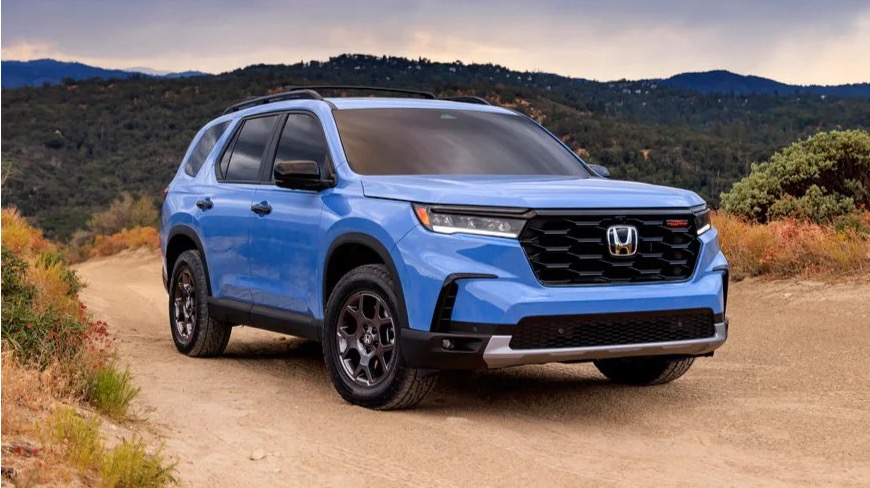
Here we are. The finish line. After three months of scouring ads, cold-calling dealers, strategizing with ChatGPT and Gemini, and dissecting the real-world difference between “low” and “high” mileage, the hunt is over. I traded in my Tesla Model Y and drove off in a Honda Pilot Trailsport.
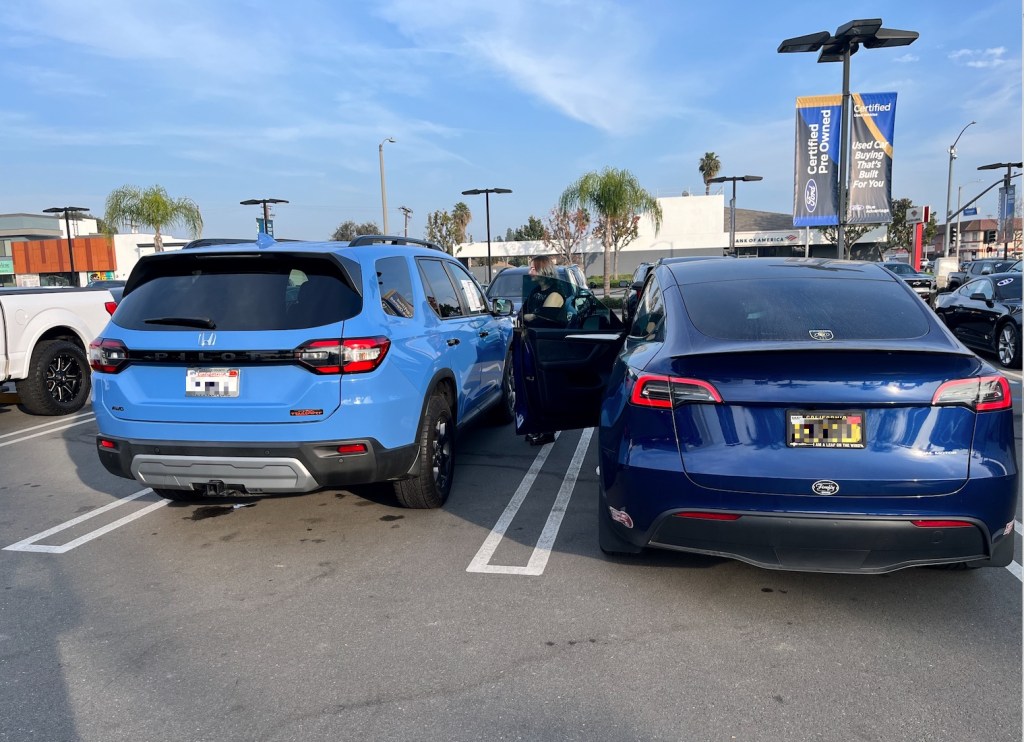
Why the Switch? My car adventure started with a need to rethink my setup. I originally bought a Tesla Model 3 for the daily school run, then upgraded to a 2024 Long Range Model Y with incredible financing. But after a couple of 2,400-mile road trips and some life changes, I realized I needed to pivot back to gas. I wanted a vehicle capable of exploring fire roads in National Parks—like Sequoia, which has 100 miles of touring roads but zero charging infrastructure. Plus, Tesla values have taken a beating recently, and I wanted to exit before the depreciation curve got worse.
The Contenders I bounced back and forth between the Toyota 4Runner SR5, Toyota RAV4, Honda Passport, and the Honda Pilot. I had a strict budget cap, a maximum monthly payment in mind, and a preference for lower miles. I also refused to settle for the sea of white and silver fleet cars; I wanted a color that actually looked fun.
The Methodology This wasn’t just casual browsing. I used ChatGPT heavily to speed up the research—it was significantly faster than the last time I bought a car. But AI can only do so much. If you are serious about finding a deal, you have to become a detective. You have to learn how to decipher what a Carfax report doesn’t say and perform a forensic analysis on the dealer’s photos.
That brings us to the specific truck I bought, and the “red flags” that turned out to be green lights.

What does the Carfax tell us on the surface? In this case, the report showed regular dealer maintenance at first, followed immediately by a 20,000-mile gap without records. That is normally an immediate flag for concern.
Since this vehicle was a lease, the owner didn’t have much incentive to obsess over maintenance. While many manufacturers offer free scheduled maintenance to keep leased cars in shape, something happened here. Either the truck sat for a long time, the owner did the work themselves, or they used a shop that didn’t report to Carfax. The mileage says it didnt sit so its one of the last two choices.
Even if the oil changes were done, who did them? A dealer or a quick-lube shop? Quick-lube places don’t always have the best reputation; I know of one chain that siphons oil from the dipstick tube rather than draining it completely. It’s better than nothing, but it’s not a quality job.
The “High Mileage” Factor The truck had high miles for a single year of driving. While this scares some buyers, it isn’t a dealbreaker with modern engines. My personal annual mileage is low, so after a few years of ownership, that average will balance out to “typical” numbers.
More importantly, accepting those high miles saved me $4,000 compared to a similar truck with average miles. Despite the 40k on the odometer, the truck was in mint condition. The oil I drained looked like it had been changed at least once during that 20k gap, and I swapped the transaxle and rear differential fluids immediately to be safe.
Tire Forensics Given the gap in maintenance records, I was suspicious, so I looked closely at the tires in the photos.
Why? Because lease returns have strict rules. You generally must return the car with good tires of the original quality, or pay a hefty penalty.
- If the previous owner paid the penalty: The dealer likely replaced the tires, often with the cheapest “good enough” rubber to get it off the lot.
- If the tires are original: They might be right at the edge of legal tread depth, meaning you’ll be spending $600–$1,400 on new tires right after buying the car.
In my case, the front tires were brand new (11/32″ tread) and the rears had about 40% left. The Carfax didn’t mention a replacement, and neither did the dealer certification. My guess? The owner replaced just the front two to avoid a massive penalty upon turning in the lease.
The Backstory & The Deal I verified that when the truck was turned in to Honda (as a lease return), they didn’t want a one-year-old car with such high miles. They couldn’t sell it as “Honda Certified,” so it went to auction, where a Ford dealer picked it up.
The Ford dealer was optimistic about the value, but they were wrong. By the time I found it, the truck had been sitting on the lot for almost 90 days, and the price had tumbled $3,000. I ended up paying the going rate for a 2023 model, but I got a 2024 with a much nicer interior and updated suspension.
How I Won the Negotiation The key to this deal was setting expectations before I ever stepped foot on the lot. I texted the dealer with three clear points:
- I wanted a total “out-the-door” cost quote.
- I wanted all “dealer options” removed (paint protection, GPS trackers, etc.).
- I was already pre-qualified for a loan.
This sent a clear message: I know what I want, I know what I won’t pay for, and I’m ready to buy.
This filter is incredibly effective. It weeds out dealers who want to play games or bundle junk fees. In the past three months, I found the average “dealer options” markup was around $5,000. Some dealers artificially lower the car price just to add these fees back in—a scummy tactic.
I actually canceled a previous deal because a salesman raised the price online between my morning call and my evening appointment. When I confronted him, he said, “I will work to get you the best deal I can,” rather than honoring the original price. Sheesh.
The Bottom Line In the end, I got the car I wanted at a fair price and only had to spend a few hundred extra to catch up on maintenance. A little detective work goes a long way.
This blog post is available at my new car purchasing assistance site at http://www.autoclarity.pro

Leave a comment