
If you are buying a used car, you can see the tires, the interior, the paint and a host of other things. What you cant see is inside the engine and what shape it’s in short of pulling the engine and tearing it down.
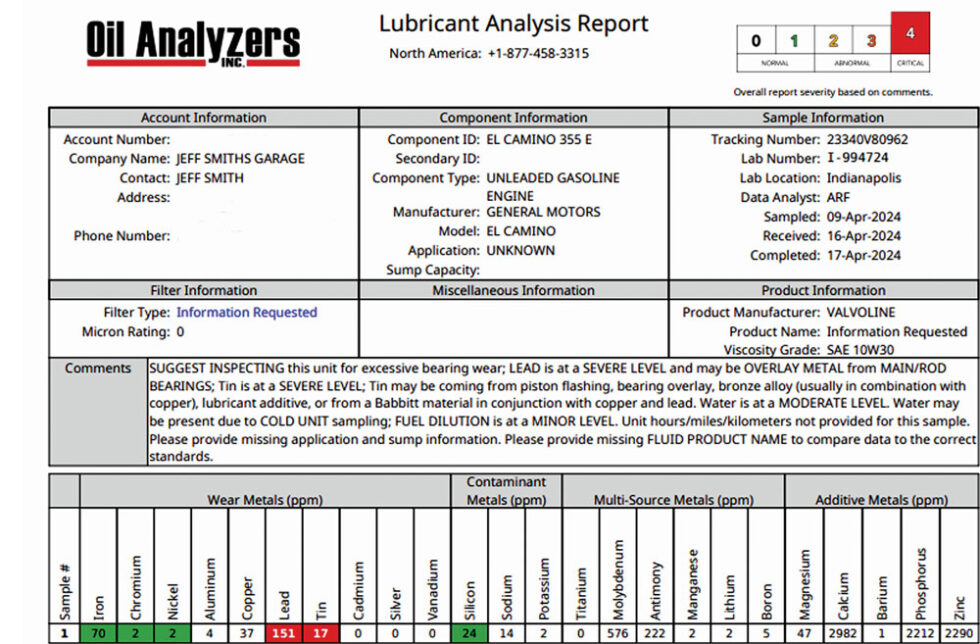
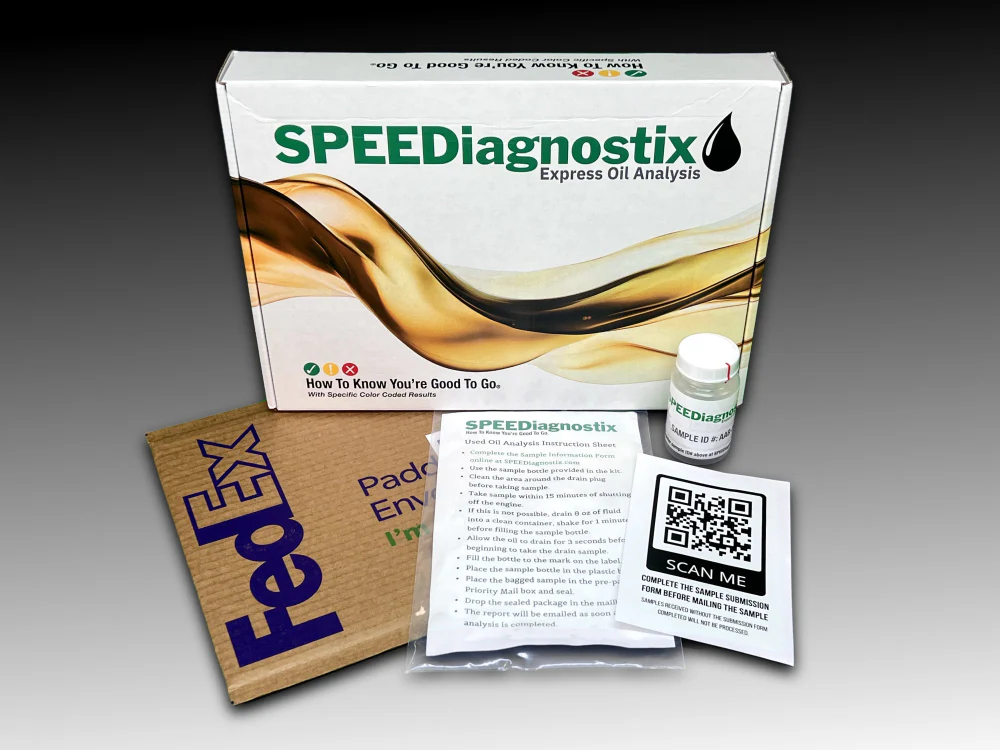
One of the things you can do is to have a sample of the oil analyzed by a company like SPEEDdiagnostix. They will send you a bottle to put a sample of oil into and then a few weeks later, you get a detailed report showing what average measurements should be based on brand of car and milage and what your actual measurements are. You will also see numbers that detail how or not the oil filter is working, life span of oil based on how it’s degraded and the amount of metal in the oil which relates directly to engine wear.
As they say in engineering, numbers do not lie. This is one of the best ways to know what you have to work with when you buy a used car even if you have a complete service history. For example, frequent oil changes are good right? Maybe and maybe not. Unless the person changing the oil prefilled the filter or cranked the engine to prime the oil filter, each change just accelerated the bearing wear a bit while waiting for the oil filter pressurize which is about 2-4 seconds of no oil pressure.
What is Oil Analysis?
Oil analysis involves collecting a sample of the engine oil and sending it to a specialized laboratory for testing. These tests evaluate the oil’s properties and the presence of various contaminants, providing valuable information about the engine’s wear and overall health.
What are the Key Benefits of an Oil Analysis?
There are a few key benefits for you using an oil analysis kit. I have listed 4 of the major benefits here.
- Early Detection of Problems: When you analyze your engine oil, you can identify potential issues before they become severe. Potential issues include detecting metal particles that indicate wear in engine components, or the presence of coolant, which could signal a head gasket leak. Some kits will show if there is oil dilution from fuel which will break down the oil prematurely and point to a possible fuel injector issue.
- A More Complete Understanding Engine Wear: The analysis provides quantitative data on wear metals like iron, copper, and lead, which can help gauge the level of degradation in engine components like bearings or cylinder walls. A higher concentration of these metals often indicates excessive wear, allowing you to make a more informed decision.
- Assessing Oil Condition: These tests can also show how well the oil is performing in its lubricating role. Parameters such as viscosity, acidity (TAN), and the presence of contaminants can reveal if the oil has been changed regularly or if it has degraded due to high temperatures or contamination. Even if the oil had been changed recently, the remains of the last oil stays in the engine so you will still see a clue to the condition.
- Helps with Predictive Maintenance: If you are looking to purchase a used vehicle, oil analysis can help predict future maintenance needs. If the oil test results shows signs of significant wear or contamination, it may suggest that the engine has been poorly maintained and could require costly repairs down the line.
How You Conduct an Oil Analysis
- First Select a Reputable Oil Analysis Company: Research and choose a company known for its reliable testing services. Look for one that specializes in automotive oil analysis to ensure accurate results.
- Collect an Oil Sample: Follow the company’s guidelines for collecting an oil sample. Typically, this involves drawing a sample from the oil dipstick using a vacuum pump or when you drain the oil after the engine has been warmed up to ensure proper circulation.
- Send the Sample in for Testing: Once you collect the sample, package, fill out the paperworkl and then send the sample to the laboratory as per their instructions. Most companies provide kits that include everything necessary to safely ship your sample.
- Review the Results: After a week or two, you’ll receive a detailed report outlining the findings. Pay attention to the levels of various metals, the oil’s physical properties, and any recommendations provided by the lab.
How do you Interpret the Results
Understanding the results can be daunting, but most analysis companies offer clear interpretations. Key indicators to look for include:
- High Levels of Wear Metals: Elevated readings of iron, copper, or aluminum can indicate significant engine wear.
- Contaminants: The presence of water, coolant, or fuel can denote serious issues needing immediate attention.
- Oil Additives: Check if the oil still contains the necessary additives; depleted additives may suggest the oil needs changing sooner than expected.
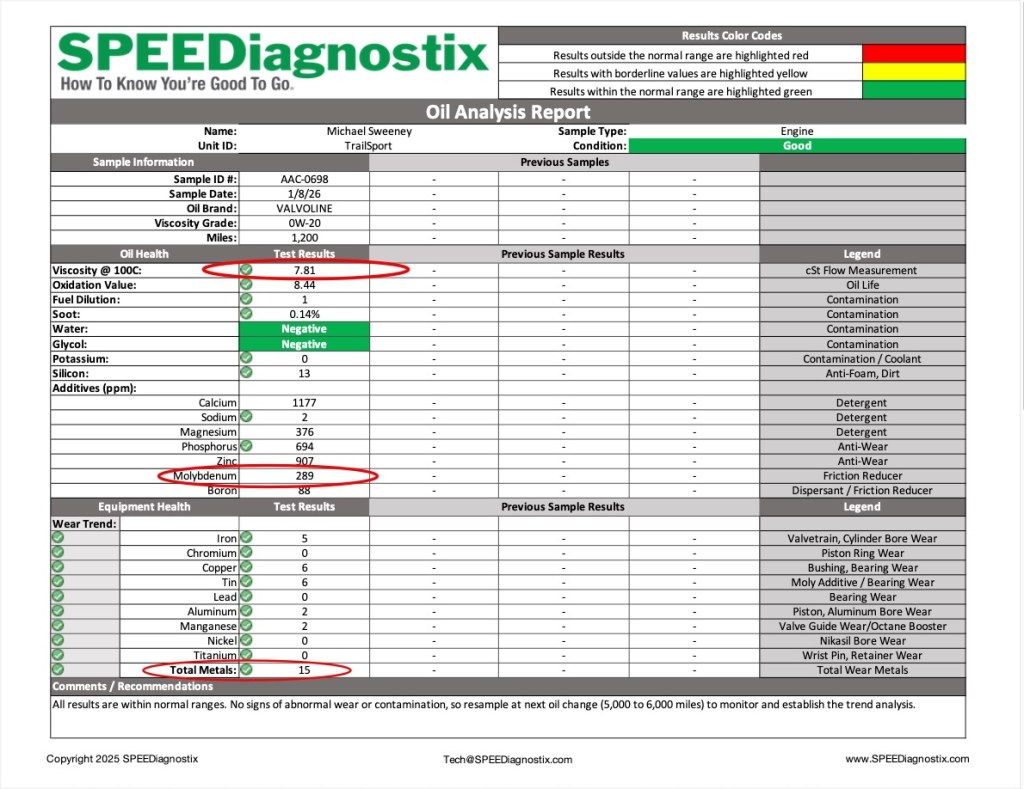
Here is a real report that I had created from oil in my used 2024 Honda Pilot I bought with 40,000 miles. In this case, the engine by all accounts is healthy and has not been abused. In the report, there are a couple of key items circled in red to look at and pay attention to.
- Viscosity at 100C: This tells us if the oil I called which was 0-20W is really that oil or something else or oil that is completely used up. In this case, it’s at the lower end of the 0-20W specification for synthetic oil. Which is a good sign though I prefer a thicker oil for summer.
- Molybdeum: At 289, that points to a high quality mileage efficient oil which ties back to the slightly thinner oil which is also a sign of a milage efficient oil
- Total Metals: This is a key measurement. How much metal is in the oil. There will always be some metal. But you want a low number which 15 is. That points to normal or slightly better than normal wear. The independent metal numbers gives a clue to what is wearing the most. Iron from the cylinder walls, copper and tin are typically from the bearings for the crankshaft and rods.
- Water and Glycol: Either of these present is bad news. That points to oil contamination with coolant which can be something like a cracked block or bad head gasket. Both tend to be very expensive to fix.
- Fuel Dilution: A high number here can point to dirty injectors or other fuel delivery issues where too much fuel is being put into the engine and some of it is ending up in the oil.
Conclusion
Using oil analysis as part of your pre-purchase inspection or afterwards can be a game-changer in assessing the true state of a used car’s engine. This proactive approach not only helps you avoid potential pitfalls but also aids in negotiating a fair price based on the engine’s health. By investing in this simple test which can range from 25 to 65 USD, you can gain peace of mind and confidence in your used car purchase. IF you test consistently over the long run, you can build a very good trend line to predict engine wear and items to look at before they become a real problem. You can see when you may want to consider a different blend of oil or different brand that has different additives for specific use cases. For my Honda, I will be switching from the standard gas efficient 0-20W synthetic oil to Mobil 1 Truck and SUV synthetic which is formulated with severe conditions in mind such as towing, high heat and stop/go traffic. There are specific blends for high mileage engines or brand new engines for example. Blends for maximum gas efficiency or even blends of conventional and synthetic oil like my 2007 Ford Escape wants to see.
All oils are not created equal and it can be worth your time to research a bit and pick the appropriate oil for your use case. The owners manual generally calls out to specific use cases, normal and severe driving. But read the definitions of “normal” and “severe”. Many times “severe” is what we call normal commuting and not just the typical towing or very hot months.

Leave a comment