
If you have read some of my past posts, you would know that I have taken several long trips in excess of 2,000 miles, in my two Teslas. One a Standard Plus Model 3 and the other was a Model Y Long Range. The trips were awesome and I would tell any Tesla owner not to fear them. Its different for the CCS brothers and sisters out there even with the newer V4 Superchargers and adapters.
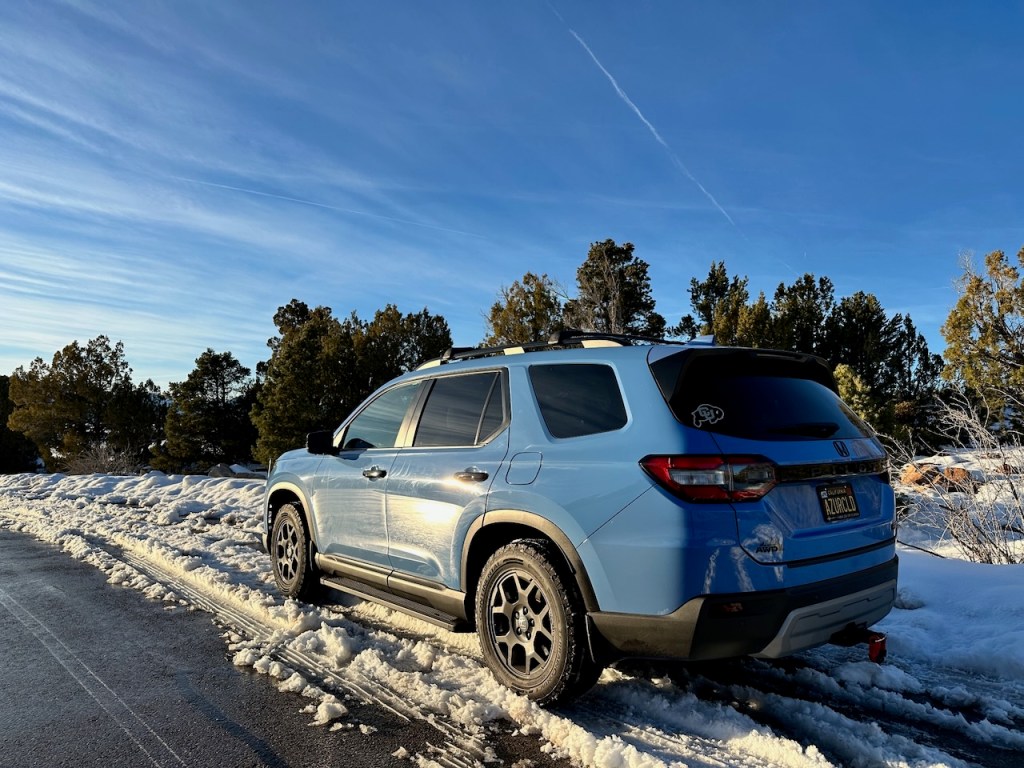
Recently I traded my Model Y for a 2024 Honda Trail Sport gas SUV. If you want to know the details as to why I left Tesla behind, I wrote a piece for Medium that you can read here. I wont go into it in this post. I picked the Trail Sport for several reasons, not least of all is that it has some real factory mods for off road use. Real off road tires, 1 inch lift from the factory Pilot, real skid plates under the car and re-tuned suspension. All of which lends it to my plans of touring the back roads of our National Parks.
Last month I was able to take the Honda on a trip to CO from CA that I have done before in my Model Y and so I was able to compare the two versions fairly accurately. The trip was 2300 miles. It went from Orange County through Las Vegas then across Utah and ended up in Fort Collins CO. Then on the way back, I stopped by Moab and then headed back home.
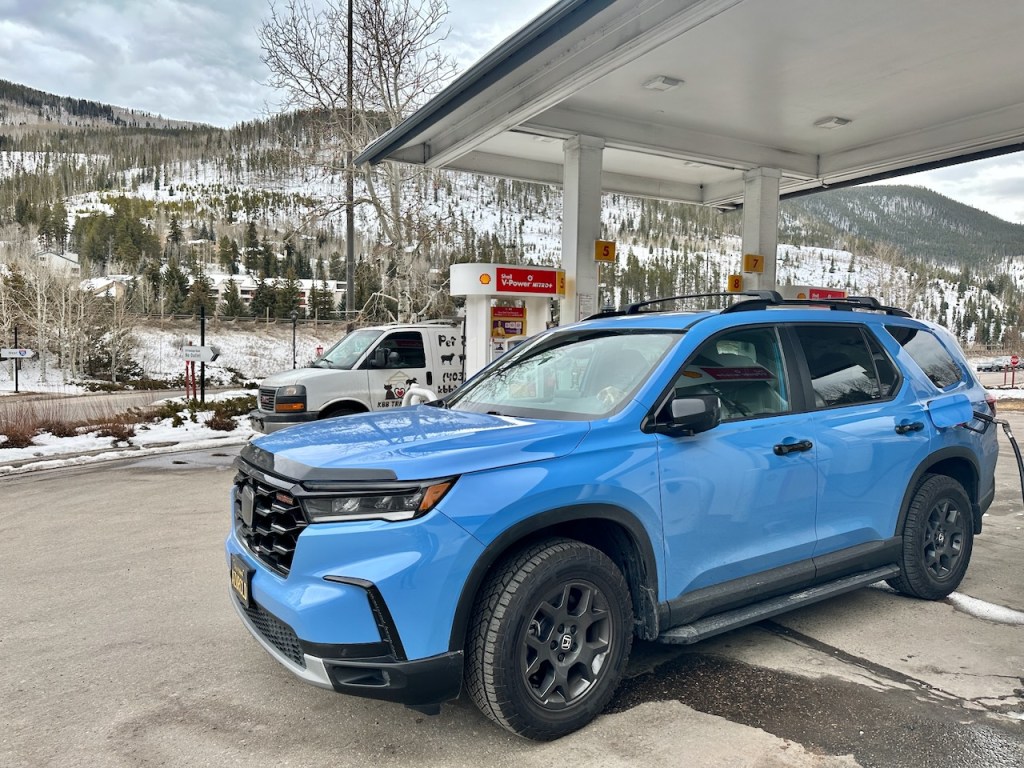
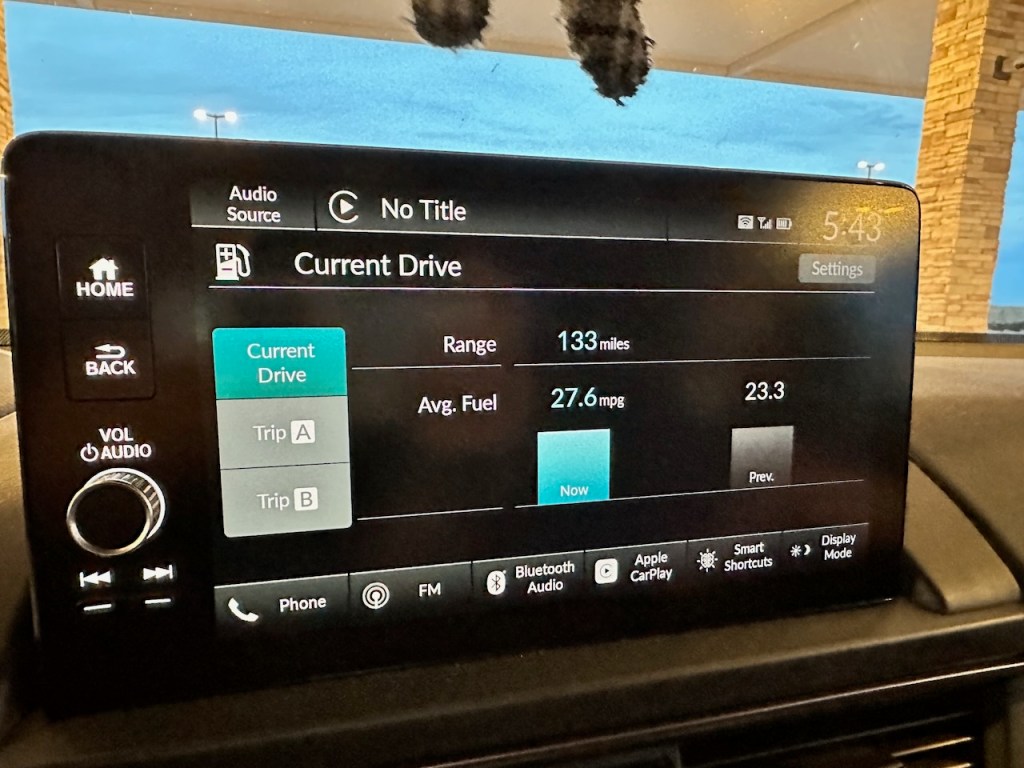
My gas was 390 dollars all in and that was spending for Premium (Super) each time. My gas milage varied from 18 mpg crawling up the Rockies. My high was 27 mpg going from Monument CO to Fort Collins, which is around 100 miles each way.
While driving my Model Y, I used a cost of 40 cents per KwH as an average price. I needed 11 stops to charge. The price came in at about 290 in recharging costs. So about 100 dollars difference between gas and EV. But the real difference is that the Tesla needed several hours of charging spread over those 11 stops. While in my Honda, each stop at 300 miles was about 10-15 mins vs 30-45 mins. That became evident during my trip from Moab to home. The journey in the Honda was 11 hours or about 725 miles. The same drive in my Y was a two day trip or close to 18 hours in total. So while the Tesla was 100 dollars cheaper, I needed to spend for one more night in the hotel plus another day of food to match the Honda’s distance.
I’m not writing this to trash EVs. I still believe they are the real future of cars. However, there are limitations you must be aware of. You must also be willing to live with these limitations when shopping for an EV.
Its not just range but weather comes into play. On this trip, I had lows in the low teens. My Y would lose about 20% of its range in that kind of cold. It was still one of the better EVs in the cold. If you want to leave the main highway and get on the byways and trails, you can pretty much forget it with an EV due to the lack of charging off the main roads. Even if you find a charger off the beaten path, it may not be working. In my case, I found it buried under a pile of snow from when the parking lot was plowed.
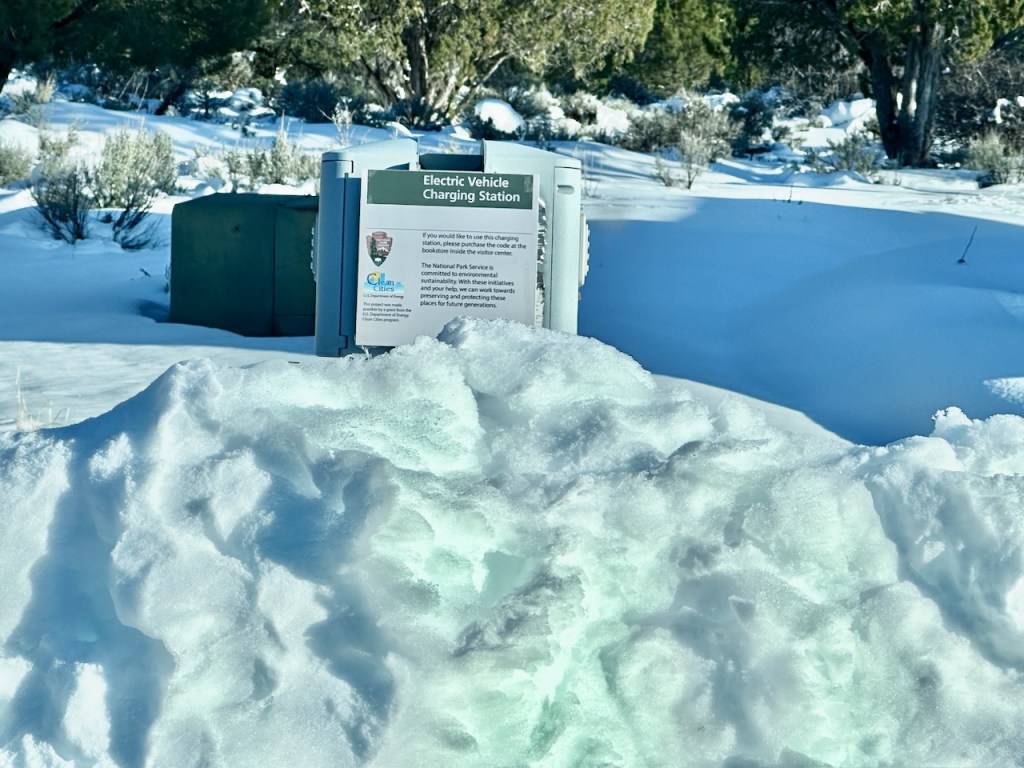
While I appreciate a clear parking lot, the piling of the snow over the charger is a pretty solid indicator of how people think of charging or not think. By contrast, every gas station I was at was plowed and cleared of snow from the street to the pumps. I had an occasion to charge my Y at Breckenridge CO at a Supercharger there. The road was cleared, and the parking lot leading to the gas pumps was also cleared. However, the Superchargers were not cleared. I had to drive up on top of several inches of snow and ice to back into the charger. The saving grace for myself was I had snow tires on my Y so I had the traction needed to do this. Not everyone did because the roads were “clear” at the time.
At Sequoia National Park, it was again snow and cold that put a damper on my exploring of the park. I started with 90% charge which should have been close to 180 miles of range. Between the climb up to 8500 feet, the cold and the snow, I was at 42% at a bit over 45 miles into the park. And the park has ZERO charging available inside the borders of the park.
My Honda, by contrast, went from 4,000 feet to a bit over 11,000 feet in snow. The temps were in the high teens, and the estimated range was 320 miles on a full tank. The Honda came down the other side with 170 miles of range left. The total distance it traveled was over 140 miles. Between that and the 10 mins it took to fill the tank of the Honda vs the two charging stops needed in the Y to cover the same distance which added 1.5 hours, the Y is a hard sell to the family traveling with me.
When you shopping for a new car and trying to decide between the EV and the gas ( ICE) car, it is situations like this you need to be very honest to yourself about. For commuting, in town driving and even moderate driving, the EV can be very practical and save some money. But, and this can be a big BUT, if you want the maximum flexibility on trips, you really want to consider sticking with a gas car. If you want short turn around times, you really want to consider sticking with a gas car. If you cannot charge at home, you really want to consider sticking with a gas car. The EV folks make a big deal about the lack of preventative maintenance needed on the EV and they are correct as far as it goes. No oil changes, transmission servicing, brake pads, coolant flushes and so on. But, if you do the math, you will find that over time, like 3 years (average lease), the higher cost of the EV balances out the PMs needed on the gas car. Thus, the actual money saved is, on average, less than 1,000 dollars over the 3 years. How is that so? Figure 15K miles per year so that is two oil changes per year at 120 per oil change. Transmission service is generally 30-50K miles so you will have one transmission service for the 3 years at 300 dollars. So far we are 540 dollars into PMs. You generally do not need brakes at 45K miles unless you need help with your driving skills. You may need a rear diff oil change like my honda so thats another 120 dollars. Now we are 660 USD. Coolant is good for 100K miles as are sparkplugs. You may need an air filter for the engine which is 20 dollars. Cabin filters should be change every year for both EVs and gas so that doesnt count nor do wiper blades or tires. EVs have something around a 10-15% premium in price over the equivalent in gas so assuming a 45K car, thats 6,700 dollars you paid up front for the EV. Assuming a 72 month loan, thats 1,100 per year in a premium. Thats more than the PM costs per the first 3 years. Even if you stretch it out to the full 6 years, you havent really saved any real money. This is definitely one of those “pay me now or pay me later” situations. So the argument about EVs vs Gas do not really work for PM.
Something that you should consider when viewing an EV vs Gas on a road trip is the unexpected break down. My Honda can be fixed pretty much anywhere in the country with too much issue. 99% of the mechanics can work their way through any issue on it or ” they know a guy” that can. That is not true for Tesla or Rivian or Lucid or the rest of the EVs. Most shops wont touch an EV unless it’s something pretty basic. Most cant fix the computer or anything to do with the charging system. That requires knowledge and often times, specialized equipment and parts. Now EVs are pretty reliable overall, a lot less moving parts to break or fail but they do break. If you wander off the main highways or stray into states that are not EV friendly, you will be hard pressed to get support and help if it’s needed. Again, its a personal comfort level and what amount of risk you are willing to live with. I’ve been fortunate with my EVs that I can do alot more than the average person and never really had a major issue on the road. That hasnt been the case for all my friends.
Finally, I want to bring up something that makes some people very uncomfortable but it’s a real issue. We live in a world of judgment today. You are judged by the people you are around, by the car you drive and many other factors. But lets focus on the car since this is about road trips. I have been judged by strangers on road trips for no other reason because I was driving a Tesla. Everything from ” rolling coal” to being tail gated to overt hostility when I pulled into a minimart to get some snacks. A classic case was in Utah at a Denny’s that I had stopped at in my Y for lunch. The staff saw me pull up and get out my Tesla. They were polite but not friendly. My food arrived fine but no offers of refills or small talk or any of the normal behavior you would expect. I know what the issue was because two personal phone cases the staff had, were covered in Trump stickers. Fine.. everyone is entitled to their opinion. When I came through the same Denny’s this last time, I pulled up in my Trailsport, parked in the same place ( it’s not a busy place at lunch) and the staff watched me come in. Night and day difference. Friendly, small talk, constant refills on the coffee, are you just passing through and so on. If this kind of behavior differences bother you, then you need to seriously consider your choice. My Tesla became something of a lightning rod for a lot of reasons out of my control. And Ultimately that was one of the deciding factors to leave Telsa and go back to gas. Did the jerks win? No, they didnt but I didnt want to be associated with Elon any more and coupled with the type of road trips I want to do, it was an easy choice for me. It is rare for a decision to be clearly defined. When it comes to road trips and the car to use, it’s a very grey area. It’s based on personal likes. It depends on the level of acceptable risk, whether you’re alone or traveling with family, and so on. I hope this post brings some clarity to your thinking about it.

Leave a comment